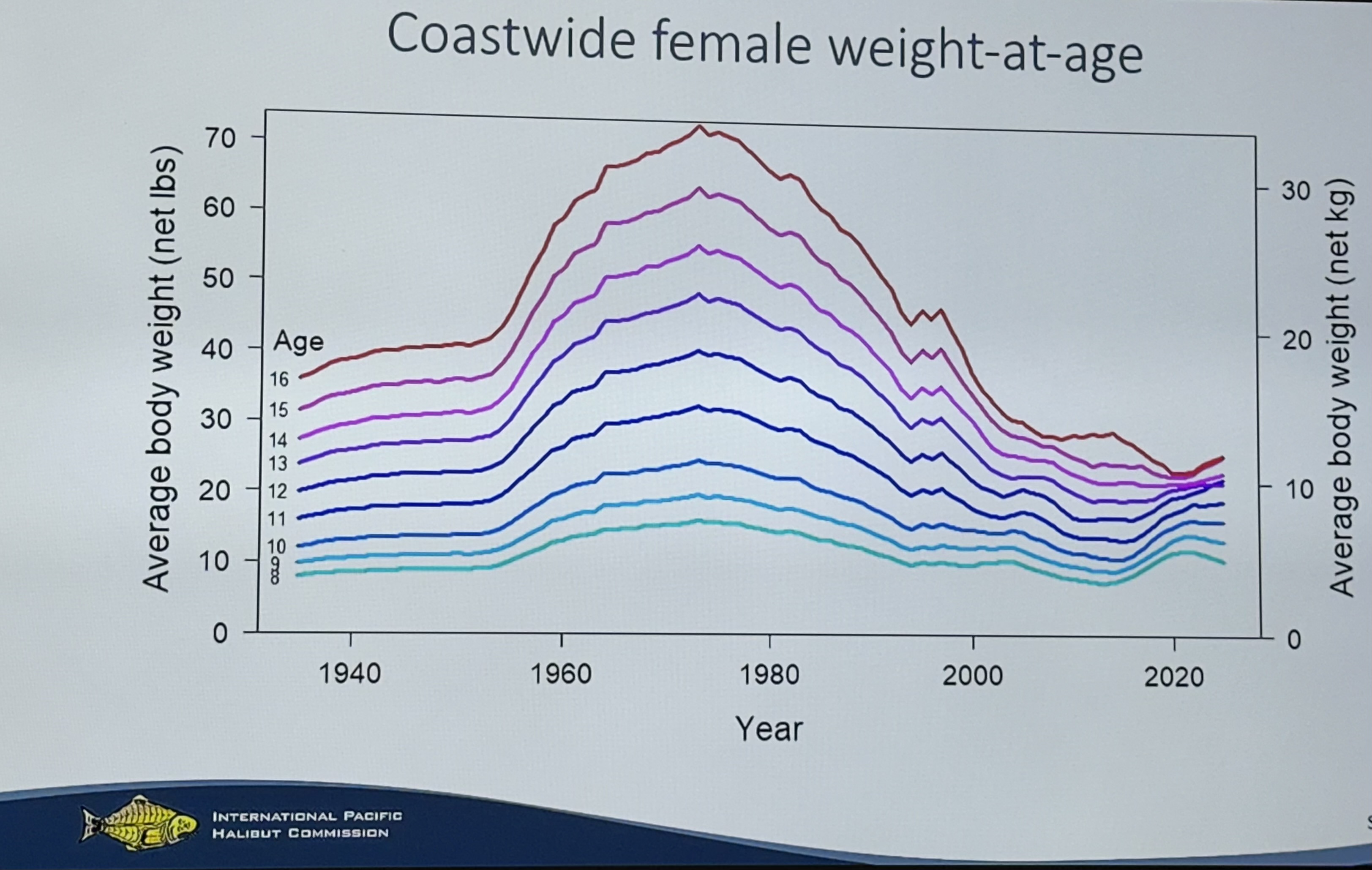
Pacific halibut have been shrinking for years according to data from the International Pacific Halibut Commission (IPHC). Halibut, especially females are growing at a much slower rate than years past. For instance, a 70-pound female halibut caught in the 1970s could weigh about 30 pounds today.
“Unfortunately, we do not have a good understanding of the most important factors affecting size-at-age and how these may have changed over time.” Explains IPHC’s Dr. Ian Stewart, Quantitative Scientist (Stock Assessment).
“There is a considerable amount of research on the topic with no single explanation explaining the specific history. We have seen small fish in the 1930s and 1940s, a peak in the late 1970s and smaller fish in recent decades, Stewart explains.”
He further explains, “Hypotheses include: density dependence (competition for resources with other halibut or other species), environmental conditions (e.g., temperature), and fishing effects on each cohort (catching the fastest growing fish first such that at older ages we see more of the slower growing fish).”
Another likely explanation is the increasing commercial trawl fishery along the West Coast. The trawl fishery targets many species, many of which halibut eat. For instance, in the Bearing Sea trawlers target Pollack, a food source to halibut. Off the California, Oregon, Washington and British Columbia coasts trawlers target Whiting (Hake), another favorite major food source of halibut.
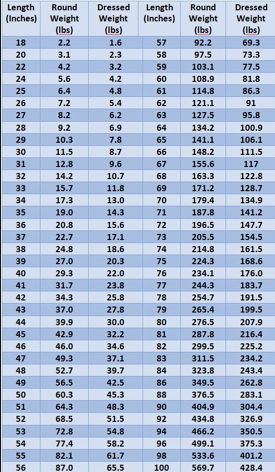
Below is the 1970s Halibut Length to Weight Chart
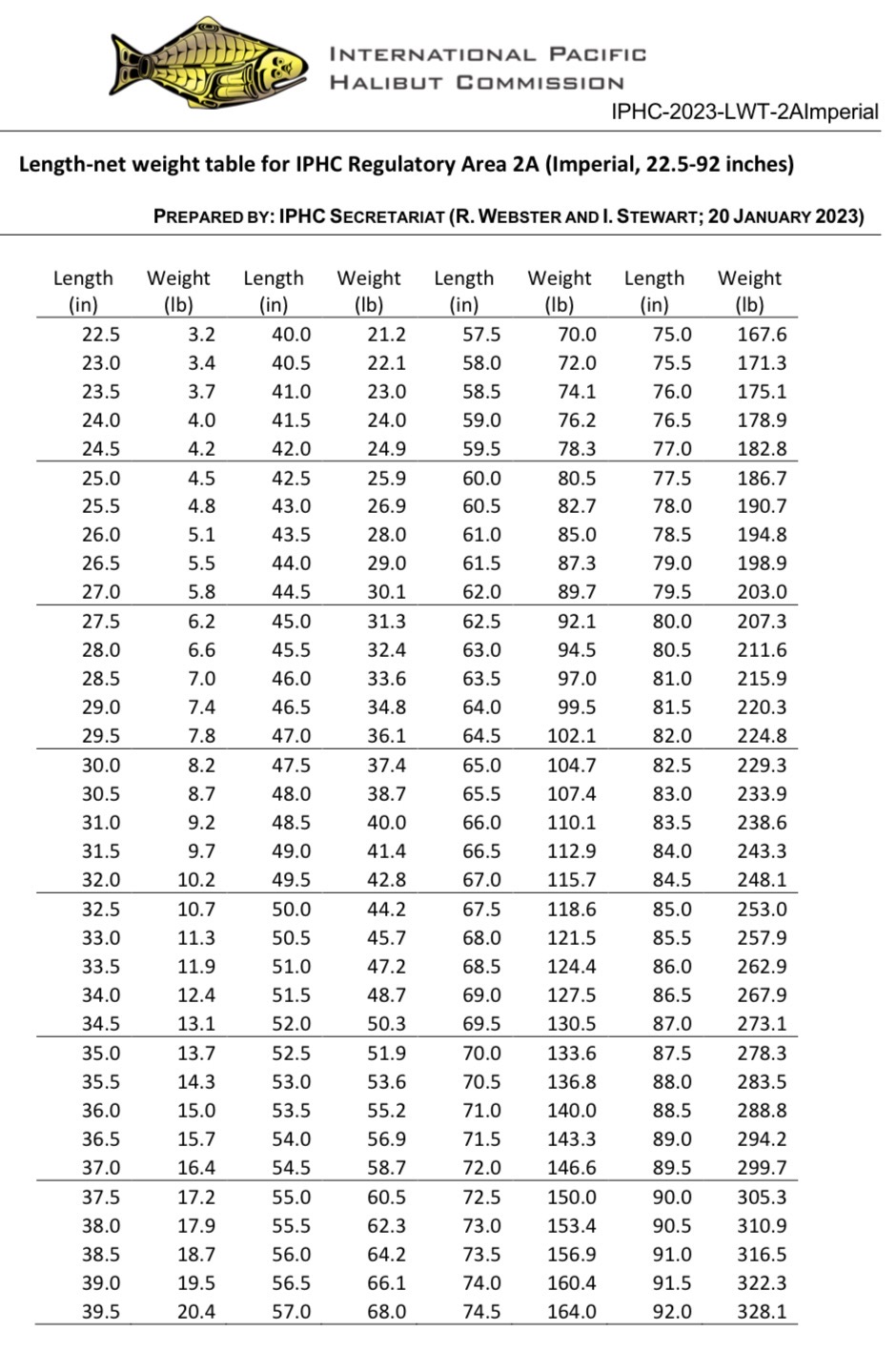
Below is the revised Area 2A Halibut Length to Weight Chart
The commercial trawl fleet is colliding with conservation, cooperative fisheries management, politics and the almighty $$$. NOAA is run by the U.S. Department of Commerce, in my opinion a direct conflict of fisheries management because of the goal to put money over conservation. As an example, the IPHC has a large area in Alaska closed to all halibut anglers. However, the Trawl fleet is still able to enter the area and kill hundreds of thousands of small nursery halibut. In Alaska alone, the trawl fleet kills millions of pounds yearly. Last year 8.96 million pounds. In previous years the numbers were much higher.
President Trump’s recent executive order, 14276, “Restoring American Seafood Competitiveness,” puts more pressure on fishery managers to prioritize profits. The multi-billion-dollar trawl fleet has lots of influence in the Legislature and Senate as they contribute heavily to political campaigns. Conservation of our halibut resource and other species remains at a crossroads of conservation vs. profits. Currently profits are prevailing.
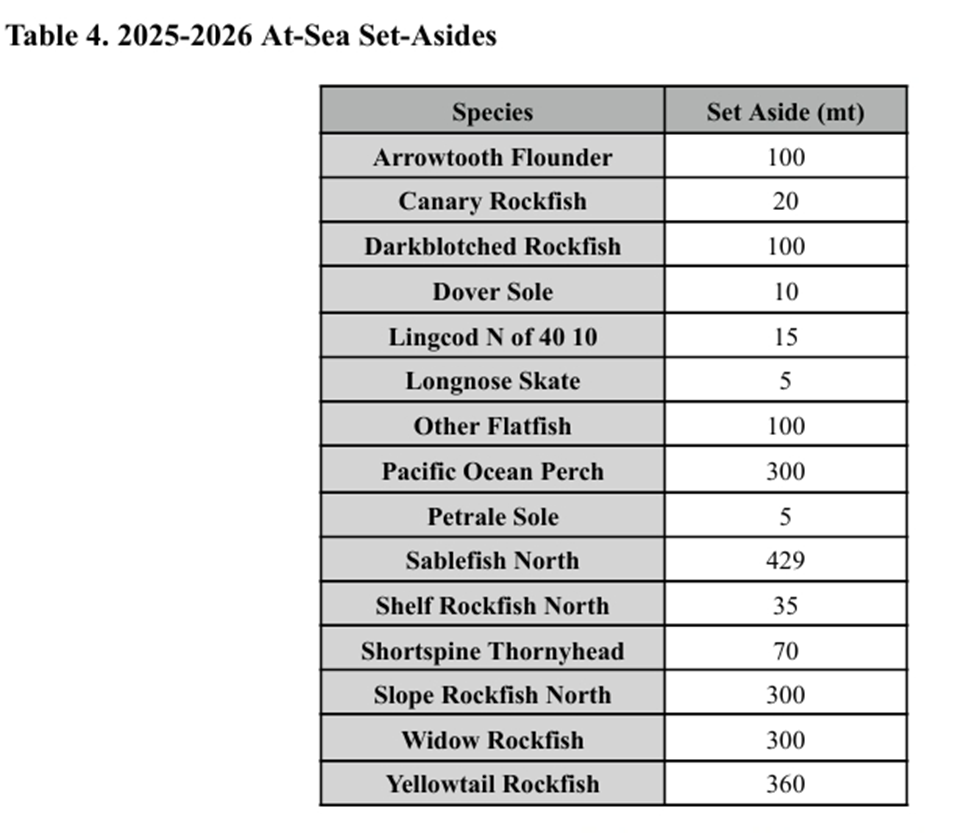
While halibut is the topic here, many other species suffer due to bycatch. In the West Coast Whiting trawl fishery they receive pre-determined “Set Asides” in other words, accepted mortality of a number of species to enable the trawl fishery to continue the “Death Drag” fishery.
The chart below shows numbers in Metric Tons.
In my opinion, until something is done about the U.S. trawl fleet our fishery resources will continue to suffer. For conservation of our fish stocks to survive something must be done.



 SquidPro Tackle's Halibut Fishing Chronicles